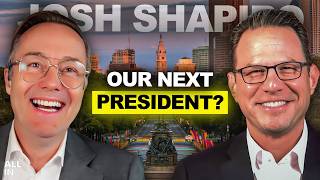
Josh Shapiro on Trump, Iran War Chaos, Israel's Failure, the Economy, and 2028 Race
Episode Details
In an extensive interview on the All-In Podcast, Pennsylvania Governor Josh Shapiro outlines his pro-growth strategy. He emphasizes Permitting Reform to accelerate infrastructure like Data Centers and investments in Life Sciences. Shapiro contrasts his approach with other states like California, led by Gavin Newsom, and New York, noting that high taxes are driving Venture Capital and business leaders to places like Austin, Texas. He firmly opposes the Wealth Tax on Capital gains advocated by figures like Elizabeth Warren and Bernie Sanders. Shapiro highlights his tough stance on Fraud, pointing to his successful prosecutions involving Medicaid and PPP loans. Addressing workforce and economic issues, he champions the Generation Toolbelt movement over traditional Higher Education and discusses a $1 billion plan to combat the Housing Crisis. Transitioning to national politics, Shapiro, a prominent figure in the Democratic Party, critiques Donald Trump and the Republican Party. He argues that Tariffs imposed by Trump have worsened Inflation and criticizes the administration's chaotic handling of the War with Iran. Furthermore, Shapiro condemns the abuse of the Presidential Pardon Power, specifically citing the pardoning of CZ (Changpeng Zhao). This abuse of power is also discussed in the context of Joe Biden pardoning his son, Hunter Biden, following an investigation by the DOJ (Department of Justice). Shapiro also calls out Mike Johnson and the broader Congress for acting as a rubber stamp rather than a constitutional check. The hosts bring up Elon Musk and his leadership at SpaceX, as well as his association with the DOGE (Department of Government Efficiency). The political discussion also touches on Kamala Harris and her VP selection of Tim Walz. On geopolitics, Shapiro discusses the Middle East, expressing strong disapproval of Benjamin Netanyahu's leadership in Israel following the October 7th attacks and the ongoing conflict in Gaza involving the militant group Hamas. Despite his criticisms of Israeli leadership, Shapiro draws a firm line against Anti-Semitism, specifically condemning incidents at Columbia University and Harvard. He concludes by stressing the need for stable governance to address domestic priorities like Healthcare and to maintain American stability.
Governor Josh Shapiro outlines a pro-growth, moderate Democratic platform centered on administrative efficiency, infrastructure development, and workforce training. He critiques the current federal administration's handling of tariffs, foreign policy in the Middle East, and the erosion of institutional norms, advocating for a return to stable, competent governance.
Portfolio lens: This set of ideas focuses on a 'pro-growth, administrative efficiency' theme, prioritizing regions and sectors that are actively reducing regulatory friction and pivoting toward practical, skills-based economic development.
Generated with gemini-3.1-flash-lite on 7/19/2026, 5:41:47 AM. For research only. Not financial advice.Infrastructure and Permitting Reform
States and regions that prioritize 'getting to yes' through aggressive permitting reform and administrative efficiency will capture outsized investment in data centers and industrial infrastructure.
The episode highlights that Pennsylvania's move to a top-five national ranking in permitting speed, supported by a 'money-back guarantee' for delays, has made it a competitive destination for business investment compared to states with high regulatory friction.
- Pennsylvania's shift to same-day licensing for certain professions.
- The use of executive orders to streamline construction and development approvals.
- The state's status as the only growing economy in the Northeast.
- Legislative passage of additional regulatory reform bills.
- Increased capital expenditure in data centers and life sciences within the state.
- Continued migration of business leaders from high-tax, high-regulation states.
- Potential for environmental or safety oversight to be compromised by speed-focused mandates.
- Political shifts in the state legislature could reverse administrative progress.
- Macroeconomic headwinds impacting overall corporate expansion plans.
- Analyze state-level permitting data and corporate relocation announcements in Pennsylvania.
- Compare regulatory timelines across different states for industrial projects.
The 'Generation Toolbelt' Workforce Shift
The shift away from traditional four-year college requirements toward vocational and technical training creates a high-growth opportunity for trade-focused education and apprenticeship platforms.
The episode emphasizes a policy shift to remove college degree requirements for state jobs and triple funding for vocational/technical education, reflecting a broader cultural pivot toward skilled trades like HVAC, welding, and construction.
- 60% of new state hires in Pennsylvania do not require a college degree.
- High demand for skilled trades offering six-figure salaries in sectors like shipbuilding and life sciences construction.
- Political consensus on the failure of traditional higher education to guarantee economic mobility.
- Expansion of state-funded apprenticeship programs.
- Corporate adoption of skills-based hiring practices over degree-based hiring.
- Increased enrollment in vocational and technical schools.
- Slower adoption by private sector employers compared to public sector mandates.
- Potential for labor shortages in specialized fields despite increased training.
- Economic downturns reducing demand for new construction and trade services.
- Track investment in vocational training infrastructure.
- Monitor corporate hiring policy changes regarding degree requirements.
Watchlist
- Pennsylvania economic growth metrics
- State-level permitting reform legislation
- Vocational education enrollment rates
- Energy and infrastructure project approvals
Open Questions
- How sustainable is the 'money-back guarantee' model for permits during periods of high application volume?
- Will the shift toward skills-based hiring in the public sector force a similar change in the private sector?
- To what extent will the $1 billion housing fund impact regional supply and affordability?
Key Topics & People

.jpg?width=300)
Large facilities housing servers and GPUs for AI compute, which are increasingly hard to power and zone.
The podcast hosting the interview with GameStop CEO Ryan Cohen.


US President who announced the brokering of a comprehensive Middle Eastern peace deal.

US Senator grouped with the 'new oligarchs' trying to coalesce power and control the American economy.

US Senator criticized by the hosts as part of an 'incoming politburo' seeking to seize the means of production.

Governor of California who signed laws regarding election audits.
Ongoing geopolitical conflict impacting global inflation.
Investment funding provided to startups and early-stage companies.
.jpg?width=300)
The Democratic Governor of Pennsylvania, praised for pragmatic, centrist leadership.

Hostility toward Jews, which both senators actively condemn, pointing out its disturbing rise in political discourse.
Changes to ease the regulatory burden for infrastructure projects, cited as the biggest economic lever for the US.
The political party of Senator McCormick, which seeks to build working-class coalitions across rural and urban centers.
The political party of Senator Fetterman, which he critiques for shifting too far left and prioritizing outrage politics.

A crucial swing state currently experiencing significant economic growth due to investments in AI data centers and energy.


A US state used as an example of grid fragility, particularly concerning electric vehicle charging demands and historical fires.

California's severe lack of affordable homes.
Model adapted by Hilton to audit California's state spending.
.jpg?width=300)
The Prime Minister of Israel, whose influence on U.S. foreign policy and military actions in Lebanon are discussed and scrutinized.
Profits from equity that are targeted by proposed wealth taxes in states like California.
Sector impacted by federal policies, specifically mentioned regarding Medicaid cuts and rural hospitals.

An Ivy League university mentioned as a site of chaotic and anti-Semitic protests.


The terrorist attack by Hamas on Israel that precipitated the current conflict in Gaza.
.svg?width=300)
Region currently experiencing intense conflict, where Shapiro advocates for US interests focused on stability and peace.


Vice President of the United States, discussed regarding her VP selection process and the 2024 election.

.jpg?width=300)
Speaker of the House, criticized by Shapiro for empowering Donald Trump rather than acting as a constitutional check.
The federal executive department that investigated Hunter Biden.
.jpg?width=300)
Son of Joe Biden, mentioned in the context of presidential pardons and corporate board compensation.

Crypto entrepreneur pardoned by Donald Trump, cited as an example of the abuse of pardon power.
The executive authority to pardon crimes, which Shapiro argues is being heavily abused by Donald Trump.
Post-secondary education, which Shapiro argues has been overemphasized at the expense of vocational skills.
A movement emphasizing trade skills and vocational training over traditional four-year college degrees.

A proposed tax on unrealized gains and assets, opposed by Shapiro in favor of a pro-growth approach.

An industry sector growing in Pennsylvania due to a pro-growth tax environment and supportive investments.