Episodes

California Forever: The Startup Building America's Next Great City
All-In Podcast
10/21/2025
In a presentation at the Allen Summit, Yan Stramic, CEO of California Forever, details an ambitious plan to build a new American city in Solano County, California. Backed by investors from Silicon Valley, the project aims to counteract California's systemic Failure to Build adequate infrastructure and housing, a major Housing Crisis that Stramic argues has tarnished the California Dream. The project is a multifaceted approach to revitalization, centered on three core initiatives. The first is the creation of the Solano Foundry, intended to be the largest park for High-tech Manufacturing in the United States, fostering Onshoring Manufacturing by building 'Factories of the future' powered by AI and Robotics. The second pillar addresses a critical National Security issue: Ship Building. By leveraging its extensive waterfront, California Forever plans to develop new shipyards on the West Coast, addressing the massive disparity in output compared to facilities like the Jong Jing Island shipyard in China and mitigating the strategic vulnerability of the Panama Canal in a potential conflict with the Chinese Communist Party. The third pillar is the New City Development itself—a Walkable City for up to 400,000 residents, designed with traditional, pedestrian-friendly principles. Stramic positions California Forever as a tangible symbol of a new American optimism, embodying the Re-industrialization and Abundance Movement and hearkening back to an era of great nation

Trump: Send National Guard to SF, China Rare Earths Trade War, AI's PR Crisis
All-In Podcast
10/17/2025
The All-In Podcast episode delves into several critical issues, beginning with the state of San Francisco. The hosts discuss the ongoing Crime in San Francisco, particularly the presence of open-air drug markets and Fentanyl dealers, leading to a debate on whether to deploy the National Guard, a move suggested by both Salesforce CEO Mark Benioff during his Dreamforce conference and Donald Trump. While acknowledging the progress made by Mayor Dan Lurie, the conversation highlights persistent challenges and references Washington DC as a city that benefited from similar federal intervention. The focus then shifts to the escalating US-China trade battle. The podcast analyzes China's strategic use of Export controls on Rare earth minerals and its broader strategy of Chinese mercantalism. In response, the United States is considering countermeasures like Price floors and building a Strategic reserve to mitigate its Supply chain dependency. This economic conflict is the backdrop for a planned Trump-Xi meeting in South Korea, with Treasury Secretary Scott Bessent trying to de-escalate tensions. The discussion broadens to the long-term Geopolitics of US-China relations, exploring the concept of Decoupling and reflecting on the Unipolar moment when policies, influenced by theories like Francis Fukuyama's 'End of History (theory)', enabled China's rise. This is contrasted with the more prescient 'Clash of Civilizations (theory)' by Samuel Huntington and the analysis of schol

1929 vs 2025: Andrew Ross Sorkin on Crashes, Bubbles & Lessons Learned
All-In Podcast
10/16/2025
In an All-In Podcast episode, hosts Chamath Palihapitiya and David Friedberg interview author Andrew Ross Sorkin about his new book, 1929: Inside the Greatest Crash in Wall Street History--and How It Shattered a Nation. Sorkin explains that the setup for the Stock Market Crash of 1929 involved several key factors. A major shift began around 1919 when organizations like General Motors pioneered Consumer Credit, changing the American aversion to debt. This led to a massive expansion of Leverage, with banks like National City, run by the charismatic Charlie Mitchell, lending speculators up to $10 for every $1 they invested. This period was marked by a complete Lack of Regulation, with no SEC to prevent insider trading and manipulation, fueling the speculative bubble. The boom was also driven by a new transformative technology, the Radio, with companies like RCA becoming the equivalent of today's Nvidia. This technology amplified a Social Contagion for investing and the idea of Democratization of Finance, where the American Dream shifted towards getting rich quick. Opposing this trend was Senator Carter Glass, who railed against 'mitchellism' and was a key figure behind the eventual Glass-Steagall Act. The crash ultimately triggered the Great Depression, leading to the election of Franklin D. Roosevelt and the implementation of the New Deal. Sorkin notes that policy mistakes by his predecessor, Herbert Hoover, such as enacting Tariffs, exacerbated the downturn. The discussi
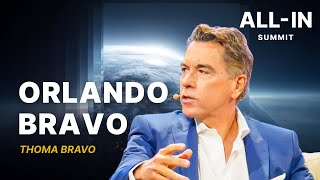
Inside Orlando Bravo’s Private Equity Playbook: How to Build a Top Firm
All-In Podcast
10/15/2025
On the All-In Podcast, featuring co-hosts David Sacks and Jason Calacanis, Orlando Bravo shared the story and strategy behind his industry-leading Private Equity firm, Thoma Bravo. He detailed his personal journey from Puerto Rico, including his philanthropic response to Hurricane Maria, to his post-Stanford start in the industry under the guidance of his mentor, Carl Thoma. Bravo explained how Thoma Bravo developed its sharp focus on Software Investing, pioneering the acquisition of undervalued recurring revenue businesses before shifting to market-leading SaaS Deals around 2010. A cornerstone of the discussion was the firm's highly effective Operating Playbook, which involves decisive cost-cutting at closing—a principle influenced by another mentor, Marcel Bernard of Motorola—followed by a rigorous focus on growth and successful Fundraising. This strategy has allowed the firm to scale from small deals to massive acquisitions, such as the Boeing Avionics Business and the recently announced purchase of Day Force, building on past successes like the sale of Dinatrace to NASDAQ. Bravo's Deal Pricing Philosophy, compared to that of Warren Buffett, emphasizes conviction and speed, making the firm a formidable competitor. Looking forward, Bravo acknowledged significant headwinds, particularly the AI Risks in Software Investing that threaten to disrupt the entire SaaS industry. He also touched on high-profile acquisitions like Elon Musk's takeover of Twitter and why his own

Bryan Johnson’s Best Health Hack Will Help You Sleep Better and Live Longer
All-In Podcast
10/14/2025
Entrepreneur Bryan Johnson, who established his credentials by selling Venmo, delivered a presentation on his personal quest for Longevity. He began by having the audience participate in a simple Biological Age Test to illustrate that chronological and biological ages can differ significantly across one's organs. Johnson's core thesis is that the most impactful health intervention is optimizing for high-quality Sleep, which he describes as the world's best performance-enhancing drug. He proposes that the best way to improve sleep is by lowering one's Resting Heart Rate before bed. His recommended tactics include finishing the final meal four hours before sleep, avoiding screens for an hour before bed, and stopping Caffeine intake around noon. The benefits of improved sleep are profound, leading to enhanced Willpower by keeping the Prefrontal Cortex functioning optimally. Furthermore, Johnson argues that quality sleep is a powerful tool for improving Mental Health and mitigating conditions like Anxiety and Depression. He directly challenges the prevailing 'grind' culture, particularly embodied by the Startup Founder archetype, stating that prioritizing sleep leads to better performance, not less. Johnson frames his entire endeavor within a philosophical concept he calls 'Don't Die', which he argues is poised to become the next major human ideology, especially with the impending arrival of Superintelligence.

Cathie Wood on How AI Can Double GDP, Bull Case for Bitcoin $1M, Elon’s Trillion-Dollar Pay Package
All-In Podcast
10/13/2025
In a detailed discussion on the All-In Podcast, Cathie Wood, CEO of Ark Invest, presents a techno-optimist vision for the next decade, centered on the theme of Disruptive Innovation. She posits that the Convergence of Technologies across Five Innovation Platforms—Robotics, Energy Storage, AI (Artificial Intelligence), Blockchain Technology, and Multiomic Sequencing—will trigger an unprecedented productivity boom, accelerating real GDP Growth to over 7% and driving Inflation to 0% or lower. Key applications of this convergence include Autonomous Mobility, where Tesla and its competitor Waymo are leading the charge, and AI in Healthcare, which Wood calls the most profound and inefficiently priced application of AI. She forecasts a market shift where truly disruptive companies will outperform the MAG Six stocks, a group that includes Apple, which she notes is facing headwinds in AI. Wood identifies political catalysts for this shift, such as policies from Donald Trump, including Trump's Tax Package, which she believes will 'turbocharge' investment into innovation and Venture Capital. Regarding specific assets, she outlines a $1.5 million bull case for Bitcoin, a valuation informed by concepts like Modern Portfolio Theory. She also strongly supports Elon Musk and his controversial Trillion-Dollar Pay Package for Tesla, seeing it as a model for incentivizing visionary leadership, and points to Humanoid Robots as a massive, underappreciated opportunity for the company. Wood

Trump Brokers Gaza Peace Deal, National Guard in Chicago, OpenAI/AMD, AI Roundtripping, Gold Rally
All-In Podcast
10/10/2025
In an episode featuring guest host Brad Gerstner, the All-In Podcast delves into major geopolitical, domestic, and technological developments. The discussion begins with the Israel-Hamas ceasefire deal, which was brokered by the Donald Trump administration with significant involvement from Jared Kushner. The deal, which involved applying pressure on both Israeli Prime Minister Benjamin Netanyahu and Hamas, is viewed as a crucial step for bringing aid to Gaza and fostering stability in the Middle East, potentially leading to an expansion of the Abraham Accords. Chimath Palihapitiya introduces an economic framework for this peace, centered on the strategic necessity of Oil Monetization for the region's future. The conversation then shifts to U.S. domestic policy, focusing on the controversial deployment of the National Guard to Chicago to support ICE operations. This action, opposed by local leaders JB Pritsker and Brandon Johnson, sparks a debate on federal authority versus states' rights. David Sacks defends the move as essential for Law and Order, citing the success in Washington DC and threats from groups like Antifa, while Jason Calacanis criticizes the perceived cruelty of the tactics, distinguishing between a preferred, policy-focused Trump 2.0 platform and a more chaotic approach he dislikes. A pragmatic alternative is noted in Maryland Governor Wes Moore's state-led crime reduction efforts. In the technology sector, the hosts analyze the landmark OpenAI/AMD GPU deal, a

Sequoia’s Roelof Botha: Why Venture Capital is Broken & How Great Companies Are Built
All-In Podcast
10/9/2025
In a comprehensive interview on the All-In Podcast, Roelof Botha, the current leader of Sequoia Capital, provides a candid assessment of the Venture Capital industry, which he describes as fundamentally 'broken' due to excessive capital chasing too few exceptional companies. He illustrates this by noting that the industry would need dozens of multi-billion dollar exits like Figma annually just to provide modest returns. Botha highlights Sequoia's strategic innovations, such as the Sequoia Scout program, which leveraged the networks of founders like Jason Calacanis and Sam Altman to source pivotal investments in Uber and Stripe. He also explains the firm's adaptation to geopolitical realities, detailing the decision to separate from its highly successful China operation, which now operates independently as Hongchan, a move influenced by the policies of the United States. A key evolution in Sequoia's strategy is The Sequoia Capital Fund, an evergreen vehicle designed to hold investments in public companies for much longer, allowing its Limited Partners (LPs) to benefit from the long-term compounding of generational companies. This is significant given that companies Sequoia backed as startups now represent over 30% of the NASDAQ's total value, including successes like Palo Alto Networks. Delving into the firm's enduring culture, Botha reflects on the mentorship of his predecessors, Doug Leone, who taught him the importance of 'heart', and Michael Moritz, who exemplified the power of 'imagination' in inve
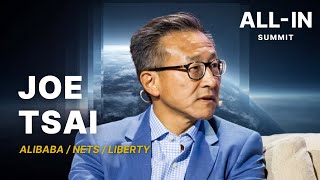
Joe Tsai on US-China Rivalry, AI's Future, Owning the Nets/Liberty, Caitlin Clark's Major Impact
All-In Podcast
10/8/2025
In this discussion, Joe Tsai, the Chairman of Alibaba and owner of the Brooklyn Nets and New York Liberty, provides insights into sports, business, and geopolitics. He begins by detailing the profound economic impact of Caitlin Clark on the WNBA, which saw metrics quadruple, and comments on his role within the NBA's influential NBA Competition Committee. Tsai then reflects on Alibaba's journey, crediting the visionary Leadership of co-founder Jack Ma during an era of Freewheeling Capitalism in China. He contrasts this with the current environment shaped by increased government Regulation (in China), creating a predictable but intensely competitive landscape where Alibaba's focus on its core businesses of E-commerce and Cloud Computing is crucial to managing its Corporate Culture and competing with rivals like ByteDance and its Tik Tok app. A central focus of the conversation is the US-China Rivalry. Tsai advocates for a cooperative approach, while host David Sacks, citing scholar Professor Mearsheimer, presents the United States' perspective as one driven by the necessity to remain the world's sole superpower, leading to inevitable competition with a rising China. This conflict is most pronounced in the global AI Race. Tsai redefines 'winning' not as creating the superior model, but as achieving the fastest AI Adoption. He points to China's rapid progress, where corporate use of AI (Artificial Intelligence) has soared, supported by strategies like embracing Open